Automating Claims Operations with AI
78% of P&C insurers are using generative AI.
27% are pursuing full claims transformation.
Patience pays. Start now and you inherit a cleared path: peers have proven which workflows move the P&L, and AI advances have compressed build and implementation from quarters to weeks.
What I do

I've spent a decade defining, building, and shipping insurance software: claims platforms, adjuster workflows, carrier-facing tools. I now apply that domain knowledge to help you ship at the edge, including AI workflows, agent orchestration, and the accelerated build techniques they unlock. The result: I help you leapfrog competitors with more efficient processes, lower operating costs, and faster cycle times.

The Landscape

Where AI is actually landing in claims

The market narrative says AI is transforming claims. The reality is more specific. A few architectures are working. Most aren't. The winners share patterns worth understanding before you commit budget.

Multi-agent orchestration is the winning architecture

Five Sigma, Shift Technology, Elysian, and the strongest new entrants all run multi-agent systems that layer onto existing platforms. Specialized agents handle intake, evaluation, correspondence, and routing independently. Single-model approaches are losing.

30% faster cycle time at Five Sigma deployments

Narrow scope tools outperform platform plays

Kyber built a business on claims correspondence alone. Avallon automates back-office data entry and voice transcription. The tools that ship and stick solve one workflow well. The "we'll automate everything" pitch keeps failing.

65% reduction in letter drafting time (Kyber)

AI-native TPAs are proving the unit economics

ClaimsSorted raised $13.3M with 20+ carrier customers. Claim leakage below 1.2%. The pattern: control the workflow end to end, automate from day one, measure relentlessly. Traditional TPAs bolting AI onto legacy processes can't match these numbers.

3x faster settlement than traditional TPAs

The Verisk ecosystem is a closed loop

XactAnalysis runs roughly 90% of property claims routing. The architecture is closed, API access is expensive, and every well-funded startup has learned to build adjacent to it rather than through it. If your operations are locked into Verisk, the AI opportunity looks different than the conference slides suggest.

Platform incumbents are making real moves

Guidewire acquired ProNavigator and is shipping 50 new AI agents. Cotality (formerly CoreLogic) rebranded and opened up its architecture with REST APIs, a Developer Portal, and a Digital Hub Alliance. The incumbents aren't sitting still, but their pace is measured in product releases, not carrier deployments. The gap between "available" and "scaled" is where the opportunity lives.

$5.1B InsurTech funding in 2025, ~66% AI-focused
Read the full landscape analysis
The Architecture

How modern claims AI actually fits together

The stages of a claim are universal. FNOL, triage, investigation, reserve, payment, audit. Every carrier runs them. Most AI pilots attack one stage in isolation. The carriers getting real lift treat the lifecycle as one system: specialized capability at each stage, a measurement primitive that proves it is working, and an adversarial review pattern that catches the AI's failures before a policyholder does. Point tools become orchestrated pipelines. That is the shift.

Stage 01

FNOL intake

Capability

Structured claim capture from calls, forms, photos, and broker email, normalized into one adjuster-ready record.

Measurement

FNOL to triage latency. Completeness score on first pass.

Adversarial review

A second agent re-extracts the claim from the raw source and flags discrepancies before the file advances.

Stage 02

Triage and routing

Capability

Severity, complexity, and path-to-resolution classification, with rationale attached to every routing decision.

Measurement

Misroute rate. Time from triage to adjuster assignment.

Adversarial review

A counter-agent argues the opposite classification and surfaces the edge cases the primary model missed.

Stage 03

Investigation

Capability

Coverage verification, document intake, fraud signals, and comparable-claim lookup, pulled into one working context.

Measurement

Investigation cycle time. Rework rate on coverage decisions.

Adversarial review

A contrarian agent challenges the coverage call against the actual policy language before the adjuster signs off.

Stage 04

Treatment and reserve setting

Capability

Reserve recommendation built from loss patterns, repair cost models, and comparable closed claims.

Measurement

Reserve accuracy at close. Reserve drift across the life of the claim.

Adversarial review

A review agent stress-tests the reserve against the twenty most similar closed files and surfaces outliers.

Stage 05

Payment

Capability

Payment execution, supplement handling, and contractor variance checks in one lane.

Measurement

Supplement frequency by contractor. Cycle time from approval to pay.

Adversarial review

An audit agent flags payments that deviate from historical patterns before they go out the door.

Stage 06

Audit and learning

Capability

Post-close review, pattern detection, and systemic issue surfacing fed back into the upstream models.

Measurement

Audit to root-cause time. Recurrence rate of flagged issues.

Adversarial review

An independent agent sanity-checks audit conclusions against the raw claim data before they shape next quarter's policy.

Orchestrating all six is the destination. Where I go first with most carriers is below.

Where I Focus

Claims workflows where AI changes the math

I don't take on the whole claims operation. I pick the workflows where AI produces a measurable delta against the current process, and I prove it before you scale it.

01

Intake and triage automation

First notice of loss processing, document classification, severity routing. The handoff between "claim filed" and "adjuster assigned" is where days disappear. AI agents that read, classify, and route can compress that window from days to minutes.

02

Estimate QA and compliance review

Checking estimates against policy language, carrier guidelines, and regulatory requirements. Judgment-heavy, error-prone, and expensive when done manually. The right AI system catches what humans miss at scale.

03

Correspondence and notice generation

Status letters, coverage determinations, denial explanations. High volume, legally sensitive, and repetitive enough that AI handles it well. Kyber proved the economics. I help carriers implement it within their own stack.

04

Catastrophe response workflow

When a CAT event hits, claims volume spikes 10x overnight. The organizations that handle it well have automated triage, pre-populated estimates from aerial imagery, and dynamic adjuster allocation. AI compresses the time between event and first contact.

05

Vendor and adjuster performance analytics

Cycle time by adjuster, supplement frequency by contractor, estimate variance by region. The data exists in most claims systems but nobody's asking the right questions of it. AI turns activity logs into actionable performance intelligence, and that intelligence drives better allocation decisions on the next claim.

My Approach

How I work with claims teams

Same methodology I use across industries, adapted for insurance claims constraints. Two-week sprints, real data, measured results.

PHASE 01

Understand the claims operation.

I map your workflow from FNOL to settlement. Not the process document version. The actual version, with the workarounds, the manual handoffs, and the judgment calls your best adjusters make that never get written down. Your team shows me where the friction is. I figure out which parts AI can solve.

PHASE 02

Evaluate the fit.

Not every claims bottleneck needs AI. Some need a better integration. Some need a process fix. I evaluate whether the problem requires interpretation and judgment, whether there's enough data to test against, and whether the business can tolerate the specific failure modes AI introduces. If the answer is "buy the vendor tool," I'll tell you that before we spend a dollar on a prototype.

PHASE 03

Build and measure.

I build a working prototype against your actual claims data and measure it: accuracy, completeness, failure modes, comparison to the current process. Your senior adjusters stress-test it. If the AI misclassifies a water damage claim as a flood exclusion, we know that before it touches a real policyholder. The output is a scorecard with specific numbers, not "it seems pretty good."

PHASE 04

Deliver the roadmap.

The prototype is the proof point. I deliver a 12-month roadmap: where else AI creates value in your claims operation, what to build next, what to buy, what to wait on, and what infrastructure needs to be in place. You leave with a plan that turns one successful proof of concept into a systematic AI capability across your claims organization.

About

Who I am

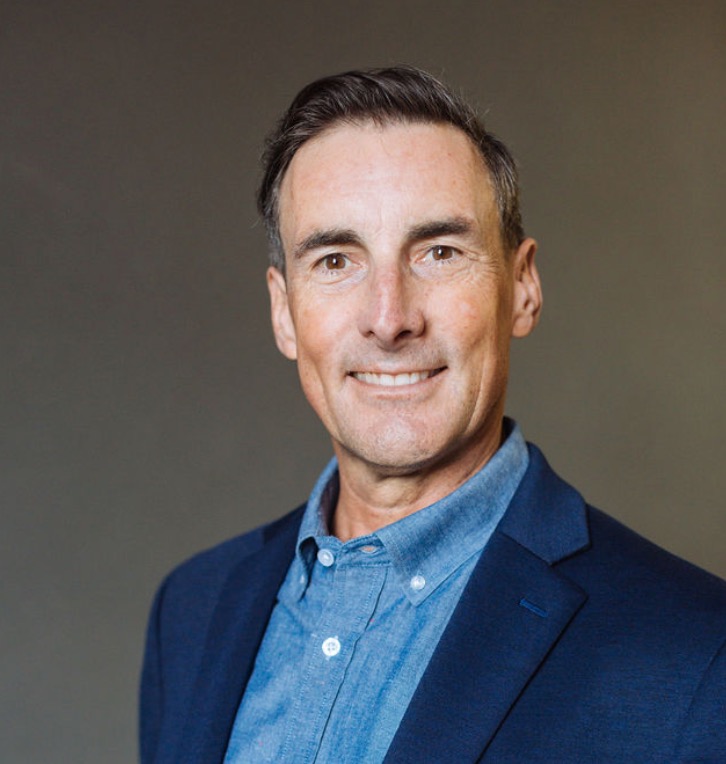
Craig Calder

Craig Calder

Founder, MaxGradient Consulting

I spent 20+ years in product and engineering leadership at companies like eBay, New Relic, and multiple insurance technology ventures. The last few years have been inside the claims industry specifically.

At Eberl Claims Affiliates, I built AI into claims intake workflows: ChatGPT-powered claim processing, ML routing models, and roof damage image detection pipelines. At Agentech (Snapsheet), I led product for an AI claims platform and learned firsthand where the technology delivers and where the industry's structural constraints make it hard.

I started MaxGradient because the gap between what AI can do in claims and what most organizations are actually getting from it is enormous. Not because the technology doesn't work, but because the implementation decisions are being made without enough practitioner context. I fill that gap.

Contact

Let's talk about your claims operation

Initial conversations are always free.

Not sure whether I can help? Let's find out in a 30-minute call. No pitch, no proposal. Just an honest read on whether AI fits your specific claims challenge.

If you're a claims leader trying to figure out where AI actually delivers ROI in your operation, and you're tired of vendor demos that don't address your real constraints, I'd like to hear about it.

Thanks. I'll be in touch soon.